
Elections are Epistemic Things
Why We Must Oppose Trump's Epistemic Authoritarianism

I have long said that the ultimate stakes of democracy are epistemic. Indeed, if democracy is understood at its most basic as the ideal of a society consisting of self-governing individuals whereby power is held according to the results of popular-sovereignty (I am drawing that definition from the various works of political philosophers Robert Talisse and Chantal Mouffe), then the backbone of democracy is a dual conception of equality: moral and epistemic. If either of these notions of equality are abandoned, democracy is likely to fail.


Moral Equality is the idea that all members of society are equal in their moral status, their personal dignity, and their implicit claim to moral respect from all others in society. There is nothing that one can do to eliminate the moral equality of another person, and there is nothing that one can do to eliminate one’s own moral standing as equal to all others.
Epistemic Equality is the idea that all of these members of society have equal status when it comes to being participants in the deliberative process of deciding how best to move forward as a society. At its most basic, epistemic equality recognizes that everyone counts as one - that is, equally - when it comes to the procedural mechanisms of social governance. Epistemic equality can be lost if someone demonstrates that they are untrustworthy with the responsibility of shared reason-giving. This can happen in formal ways due to legal violations (breaking the law might warrant losing one’s voice relative to social governance because a respect for the law - in principle - is part of what such discursive participation is all about. Formally, losing the right to vote is effectively a way of announcing the lost of one’s epistemic equality in social life. This can also happen in informal ways when someone is such a pariah upon the rational standards of flourishing social discourse that their participation actively makes it less likely that the process of democratic deliberation will continue in productive ways. Informally, we could see this as basically the deliberative counterpart to being culturally “canceled.” Informally losing one’s epistemic equality means that one is no longer socially trusted and so their voice is made effectively irrelevant to the deliberative functioning of democratic life.
Tragically, and unjustly, informally losing epistemic equality has often happened not due to one’s own bad behavior, but due to the operations of social power structures that serve to contest moral equality by undermining the epistemic equality of groups of people. Philosophical work on the idea of “epistemic injustice” (see, for example the work of Miranda Fricker) has illustrated that members of historically marginalized groups have often been victims of such epistemic injustice insofar as their voices are not viewed as being reliable or trustworthy.
The effect is an unjust informal elimination of epistemic equality because it is not due to the bad epistemic behavior of the members of those groups, but due to the immoral behavior of powerful people attempting to maintain their own status due to historical privilege. As an example, think about women being described as “too emotional” or lacking the right “disposition” for leadership - this is an example of epistemic injustice. However, noting that someone is unfit for leadership because of their being such a consistent liar who uses distortion and diversion to manipulate audiences, rather than good arguments, is not unjust, but actually a requirement of taking the task of democratic epistemic life seriously.
Challenging someone’s epistemic equality due to their being untrustworthy with the weight of such social obligation is not, however, the same thing as challenging their moral equality. Following variously on Immanuel Kant’s notion of rational equality, and on Friedrich Nietzsche’s notion of respecting the autonomy of all others, refusing to allow bad actors in our democratic deliberation is actually a hallmark of showing those very bad actors moral respect. Indeed, I take person X seriously as a person of moral dignity precisely by refusing to ignore their failures as an epistemic pariah. If I didn’t think that they were morally equal, then I wouldn’t need to expect of them the epistemic practices that should be assumed of all people.
This basic view is an epistemic implication of Paul Woodruff’s suggestion that we should not show respect to irreverent leaders. Instead, we should be disrespectful because they have not lived up to the bar required for appropriate respect.

Epistemic equality requires that we expect each other to model deliberative virtues such as humility to possibility being wrong, hospitality to critique, honesty about views actually being held, admission of the complexity and challenges faced even by the views we do hold, and a tireless commitment to reason-giving as a requirement of responsible citizenship.
Sadly, and this should be deeply worrying for all of us who care about democracy, few (if any) elected leaders model deliberative virtue. Rather than showing us how to be good at argumentation, they show us how to be good at using fallacious reasoning for the sake of performative political theater. They position winning as more important than truth, and often minimize the relevance of evidence that cuts against where they stand. True democratic deliberation, and genuinely virtuous leadership, would model what it looks like to acknowledge error, admit complexity, avoid problematic generalizations, and remain steadfast in affirming the moral equality of all, and the epistemic equality of all others (even one’s political opponents) who operate in good epistemic fashion.
We do not see this from our leaders. We see pseudo-argument that is more worried about social media influence than in fostering the epistemic integrity of the shared deliberative democratic community. Tragically, many of our leaders are the ones most guilty of enacting epistemic injustice by undermining the moral equality of our neighbors. This is not acceptable. It must be opposed in the very name of the democratic commitments that such behavior threatens.
I would like to say that we deserve better, but I am increasingly not sure that we do.
Even if many of our leaders are failing to model deliberative virtue, they are not all failing equally. No one has done more to undermine moral and epistemic equality in America (and increasingly globally as leaders are showing up around the world trying to replicate his example) more than Donald Trump and those who empower him.
Any commitment to moral and epistemic equality as crucial requirements for a well-functioning democracy should lead us to oppose Trumpism, broadly, and Donald Trump, specifically. He is a liar. He is a bullshitter (in the sense given the term by Harry Frankfurt). He does not respect the moral or epistemic equality of all of his fellow members of society. Indeed, he goes out of his way to undermine such equality in ways that serve his own purposes and reinforce his own self-interest.
Crucially, none of what I am saying is “political” in the sense of representing a Progressive as opposed to Conservative view of social life and shared governance or specific views of public policy. Indeed, I take these claims to be about the lowest bar for demonstrating one’s own commitment to evidence-based belief. It should not be controversial to say that Trump is a liar (even if you happen to support this or that policy proposal that he defends). It should not be controversial to say that Trump is self-interested in ways that cut against the ideas of moral and epistemic equality as shared social necessities.
The list of examples of his threat to democracy is so long that I will not rehash it here, but his speech last night about the threats to American elections is something that must motivate a response from any remaining member of American society who still thinks that moral and epistemic equality are worth fighting for.
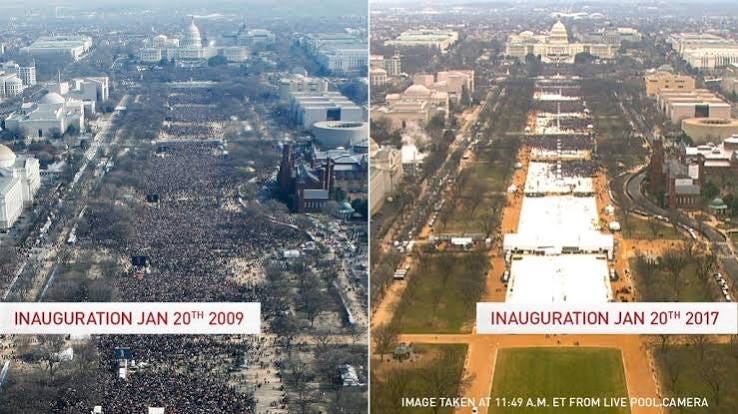
From the very first moment of his first term, he has lied about what is evidentially clear. The patently false claims about the crowd size at his inauguration now seems like such an irrelevant and silly thing in a world facing so much despair, but actually it was what set the stage for everything else that followed. When a leader says that we should ignore public reason, eschew evidence, and deny facts in order to remain loyal to their power, we have left democracy behind. This is epistemic authoritarianism, pure and simple. So when that same person tells us that the elections that threaten to check his power are unfair, we should immediately be suspicious. And yet, in the present circumstances, the public evidence that there is no wide-spread voter fraud is so overwhelming that even claiming that such fraud exists is sufficient reason to be no longer viewed as an epistemic equal. Trump’s speech last night about election “security” is, of itself, enough to consider him an epistemic pariah on the very society he has, tragically, been entrusted to lead.
Elections are epistemic things. And we must treat them as such!
They are procedures for allowing popular sovereignty to function as the real seat of social self-governance. But, remember that they only work when moral and epistemic equality are assumed social values. Otherwise, the popular sovereignty is not, itself, epistemically warranted, but a name given to the interests of those who have managed no longer to trust the rational will of self-governing individuals. As such, sowing distrust in free and fair elections without evidence to support such claims (and I mean this would be a high bar of evidential necessity given the consequences of such distrust for the democracy where it occurs) is tantamount to yet one more turn of epistemic authoritarianism.
As recent reporting has made clear, Trump’s attempts to challenge the security of our elections is not simply because he worries about losing, but a pretext for being able to deploy federal power to ensure that he does not. This is epistemic authoritarianism laying the groundwork for authoritarian force.
The Law Professor, James Sample, wrote powerfully about how Trump’s speech and his “SAVE American Act” cut against the Constitution in such bold ways that it is almost shocking how anyone who cares about the law would continue to empower this nonsense. Be sure to get subscribed to his Substack “Who Decides Who Decides” and see his excellent post about Trump’s speech here:

If we take seriously that elections are epistemic phenomena then we must hold all who would undermine them epistemically accountable.
Trump must not be trusted. He must not be supported. He is a direct threat to the rule of law (as Sample explains). He is a direct threat to democracy (even if you agree with lots of his policies). He is a direct threat to moral equality. He is a direct threat to epistemic equality.
Look, I have admitted that we just don’t have a lot of good epistemic examples in our elected leadership, but we must not give in to any whataboutism here. Trump’s refusal to care about evidence when it comes to voter fraud is not simply one more example of the corruption of politicians. It is distinctive. It is unique. It is possibly what will lead to the end of American democracy in 2026.
We have time to stop this. But it requires all of us seeing the moral and epistemic equality of our neighbors. Those with whom we disagree might be wrong, but they are not, therefore, evil or irrational. Moreover, they might even be right. If we are not willing to model epistemic humility, then we can’t be frustrated when we don’t see it in others. However, whatever side you fall on politically, we must expect of each other that we care about reason. We must care about evidentially supported claims. We must stand up and oppose even those with whom we agree when they fail to display deliberative virtue.
Only if we can find the fortitude for such social epistemic courage would we possibly “deserve better” than the moral and epistemic (and, thus, authoritarian) failure that Donald Trump embodies.
I don't know what we deserve. But to support a government based on lies may tell us.
The ancient Israelites wanting a king (and a specific version) is an interesting corollary here to me. Maybe I’ll revisit that story and see how it turned out…