
Fun as Performed Resistance
The Music of Pkew, Pkew, Pkew

Years ago I was talking with a friend of mine about the bizarre phenomenon of “Soundcloud Rappers" - which were all the rage back then. I genuinely hated that sort of rap and just found it to be incredibly dumb. My friend, who was dramatically more sympathetic to this group of folks than I was, said “Well, if the world sucks, then maybe just rapping about getting high and not caring about things you are supposed to care about is a kind of resistance.”
I wasn’t sure what to think about that claim then, and I am still a bit perplexed by it today. I get the idea that resistance can come in all forms and is, at its most basic, a refusal to allow some broader narrative of significance determine one’s own conception of meaning. That is fine with me, but surely there is a big difference between just trying to drink away your problems, which doesn’t actually solve any problems, and opposing the social structures by which your problems are framed in particular ways. The former strategy is escapism while the latter is potentially transformative. Or so it seems to me.
So, I have tended to hold this general line in my approach to a variety of artists that I just think are lowering the standards of what it means to be human. My annoyance at sloppy lyrics, repetitive rhythms, and general disregard for any sense of social responsibility remains in place, but something happened recently that at least has given me pause about my initial reading of my friend’s take on things.
Rarely do Spotify algorithms lead me to bands that just rock my face, (as explained by Paget Berzins so well last week in her guest post about Spotify), but recently something showed up as I was listening to some random punk playlist while writing. an academic paper about phenomenology and the ineffability of poetic expression (yeah, I know I am a nerd!) that just caused me to stop and do a deep dive into the band.
The band is Pkew, Pkew, Pkew, a punk group from Toronto.
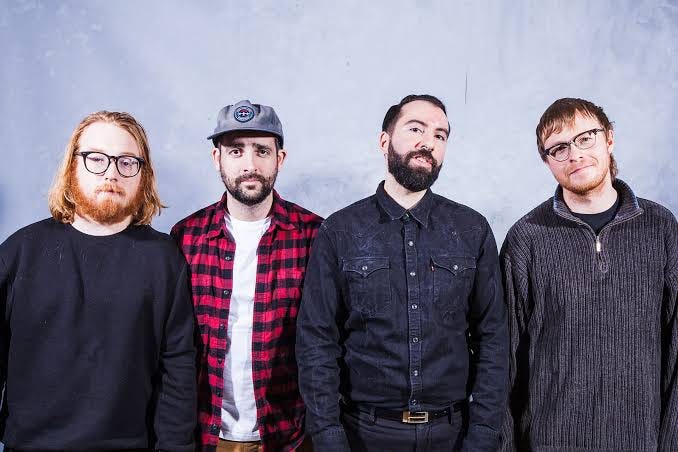
They are genuinely fantastic and yet part of what grabbed me so profoundly is that their lyrics were basically punk versions of the kind of themes found in some of the Soundcloud stuff. Rather than getting high, they talk about getting drunk with friends. Rather than overly focused on sex, they are focused on making the most of the present. Rather than being anchored in trap rhythms, they throw back to an era of punk that was more about fun than revolution. But, what really struck me while listening to them was just how good I felt about not allowing the pressures of the world to override my need for enjoyment, beauty, and an embrace of the moments we have together.
I am not sure it is exactly the same view as expressed by my friend about Soundcloud rappers, but nonetheless their music is definitely a performative resistance to a world that says we need to put away fun in the name of maturity.
Yes, I am very well aware that they struck me as profound while Lil Uzi Vert and Lil Peep make me want to kick a hole in my speakers so that I can stop the “music,” is probably directly connected to my own social position, my musical preferences, and even my age. And yet, even though I have absolutely no desire to return to those rappers to give them another chance (NOPE!), I admit that I like Pkew, Pkew, Pkew so much that they have caused me to see the radical importance of understanding fun as a kind of refusal to give into the meaning making machine of those who need us to be like them in order to reinforce the status quo.
I have often said that I go mountain biking or trout fishing in order to find the energy and charity to continue navigating a world gone mad. Out in the wild I am able to escape in order to return with purpose. I think that music likely works the same way. Escapism in theology is disastrous, but it might be very needed in relation to one’s own embrace of where you find yourself. Work can’t mean everything. Politics can’t be all consuming. Stress is deadly. Fun, just for its own sake, is a performance of one’s shared humanity as we escape the insanity to be remind ourselves why it is worth diving back in and trying to make things better.
Alright, that’s enough philosophy. Let’s have some fun. Here are some tracks that really just make me want to jump around my living room and refuse to be a grown-up at least just for a while.
The song that caused me to stop working and pay attention was “Mid 20s Skateboarder,” which has the great refrain “Mid 20s skateboarder, I hope I don’t get hurt.” This line immediately reminded me of biking with my friends. Though we are all late 40s and definitely don’t bounce back like we once did.
I love that this video version of the track goes straight into another song, “Blood Clot,” which definitely continues their general point about finding ways not so much to relive one’s glory days, but to realize that getting older doesn’t mean that those days are over.
Indeed, one of their other songs that explicitly makes that point is “Glory Days.”
I love the line: “If those were your glory days, I’m glad I wasn’t around. If those were your glory days, you must be real shitty now.” hahahahaha. The idea, here, is that if we spend our time looking back on the “glory days,” then we are likely living a life that is pretty uninspired currently. Moreover, folks who constantly look backwards in these ways are also probably misrepresenting that past as something it simply wasn’t.
And if you are looking for something exceptionally deep, then try on this track simply about ordering a pizza.
Occasionally there are glimmers of an awareness of the radical potential of their perspective. This is especially the case on “Let the Bridges We Burn Light the Way.”
Rather than giving in to the power structures that determine what matters in the world, they encourage the opposite approach. Having been told over and over “don’t burn bridges,” their response is simply - yeah, go ahead and burn bridges that are not worth crossing back over. This is actually really smart, if you think about it. I see it resonating with Socrates’ claim that we should not worry about what the powerful or cool people think, but only what the virtuous people think. So, yeah, burn bridges that make it harder to get back into the good graces of the people whose opinion you shouldn’t care about in the first place.
A final song I will highlight is “The Night John Buck Hit Three Home Runs.” This track is also almost a punk-meets-folk offering. It deals with some pretty heavy stuff and yet situates it in the most mundane aspects of human existence. One line that really hits me hard is “We can’t stop you from dying, so we’ll just stop you from dying alone.” Wow. As Anne Lamott says, quoting Ram Das, “in the end, we are all just walking each other home.” But, then right after that profound moment, we hear “Go Blue Jays.” The sublime in the pedestrian is where the task of life confronts us.
I hope that you will check out Pkew, Pkew, Pkew and I hope that you will also find ways to let having fun be a performed resistance to a world that tells us all to confuse professionalism with being boring.
Here is my favorite album by them if you want to listen to it all the way through (it will make you want to order pizza, drink beer, and ride skateboards, but maybe that is a pretty good idea while the rich ignore the humanity of the poor, the powerful run rough-trod over the marginal, and the privileged forget the plight of the marginal. Remember, the escape of fun as resistance is not that we ignore our social and moral obligations, but that we find ways to regain the strength to continue in the struggle. And, if anything joins us all in the human condition it is our shared vulnerability and our mutual capacity for joy. By fostering the latter we might better see the former.
In light of these realizations, I probably won’t be turning on Playboy Carti or Trippie Redd after Pkew, Pkew, Pkew, but at least maybe I have found a bit more sympathy for those who do. . . . . meh, probably not. That stuff is really, really bad.
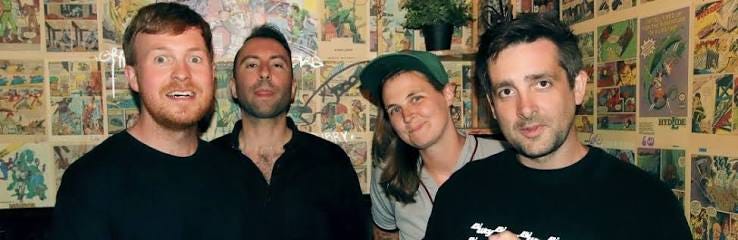
My friend grew up at 924 Gilman in the 90’s becoming an anarcho-punk in the process (he’s in the crowd pictured on the Subhumans “Live in a Dive” album). He told me once that Spazz and the absurdist comedy/grindcore movement that sprung up out of that place saved his life. Punk has a flair for the dramatic and a penchant for drawing in those with passion to burn so it necessarily ends up harboring dogmatism and extremism in its pursuit of fending off the existential threats that bombard us all (especially the the marginalized). The 924 Gilman Project in the Bay Area of California being one such expression of that idealism in action and thus, in the 90’s had become so consumed with saving the world that it was on the verge of unintentional self immolation. Enter SPAZZ. The goofball (dare I say “frat boy” energy?) of these weirdo’s was a release valve for this pressure cooker that, at least for my friend, brought the antidote to the sickness of “messianism” and allowed kids to be kids, not just saviors.
That release didn’t release them from caring or being active, it empowered them to keep going. 20 years later him and his wife started a crust punk band called Saviorself and they remain active and activists to this day